
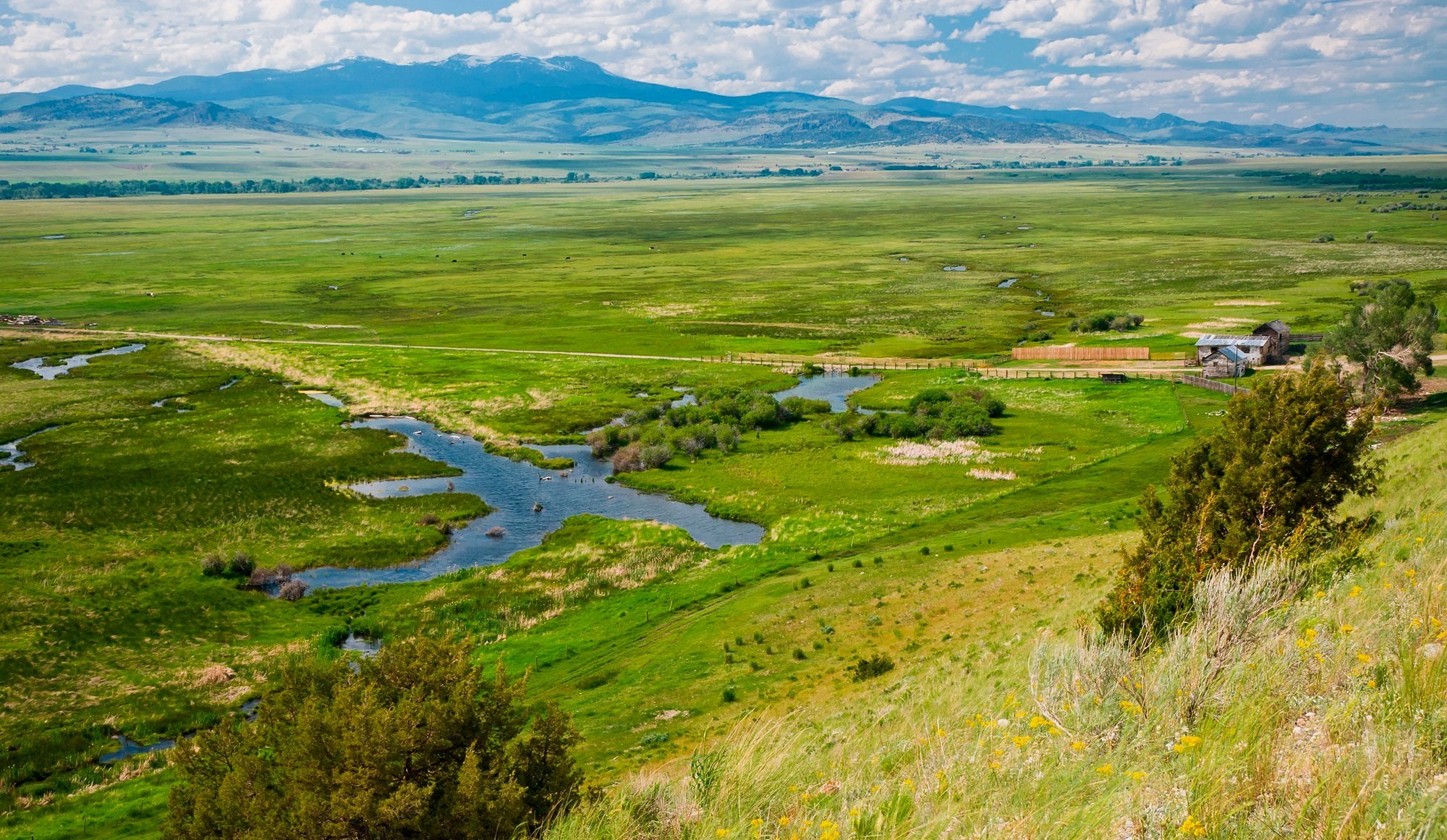
O’Dell Creek Restoration
A Collaboration with Granger Ranch, NWE, FWP, and SWCA
The Science Behind O'Dell Creek's Transformation
In 1955, O'Dell Creek's headwaters were straightened and ditched, severing the stream from its floodplain and draining the wetland complex that once sustained it. What seemed like a practical solution became a slow erosion of watershed health: the channelized creek accelerated water downstream, warmed it through exposure, and lost the natural storage that keeps streams flowing year-round.
The O'Dell Creek Headwaters Restoration Project reverses this damage by returning the creek to its original meandering path. When water meanders, it slows down, spreads across its floodplain, and reconnects with groundwater sources. This allows spring-fed flows to sustain cool, clean water through the channels. Equally important, the restored wetland complex functions again as the watershed's natural filtration and storage system—trapping sediment, cycling nutrients, and holding water during dry seasons. These <1% of our landscape that are wetlands harbor outsized ecological richness and support everything from migratory birds to the aquatic insects that feed trout.
What happens at O'Dell's headwaters ripples downstream for miles. Clean, cool water released slowly into the Madison River creates more stable conditions for the entire system. This cooperative effort between private landowners, state and federal agencies, and local nonprofits shows what's possible when we work together to heal our watershed. The Laszlo family's National Wetlands Award for Landowner Stewardship reflects not just their vision, but a model for restoration across southwest Montana.
*Conservation work on the Madison River, featured in The Madison series, requires sustained stewardship, restoration, and education.


Phase 19 will begin this spring 2025
Stay tuned for photos and updates!
